John Buxton
Artist Bio
The Historian’s Eye for the American Frontier
John Buxton is a modern master of historical realism, celebrated for his ability to transport viewers to the 18th-century American Frontier. His work is defined by an uncompromising commitment to historical accuracy, blending the skill of a fine artist with the meticulous research of a dedicated historian.
The Art of the "Living Master"
Before his rise in the world of fine art, Buxton spent decades as a successful commercial illustrator—a background that honed his technical precision and storytelling ability. Today, he is recognized as a "Living Master" by the Art Renewal Center, a testament to his elite level of skill in traditional oil painting.
-
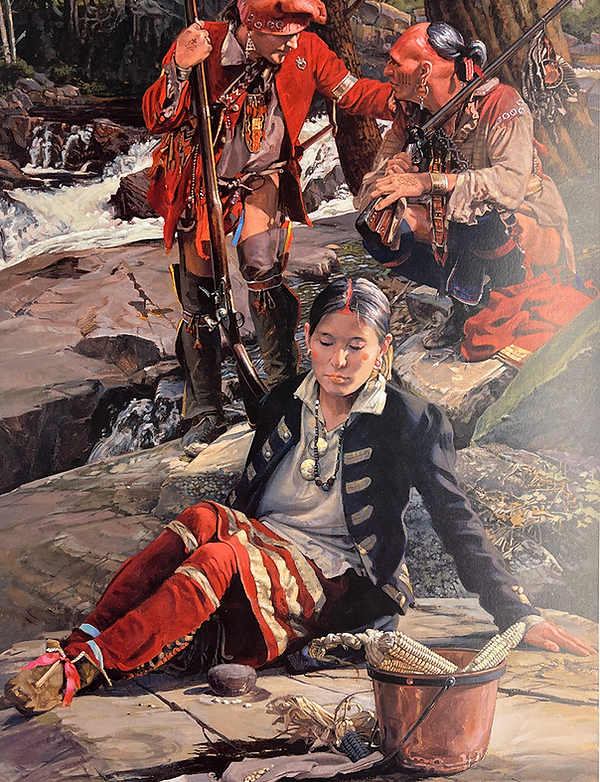
Period Specificity: Buxton is a specialist in the Eastern Woodland Frontier (circa 1750–1810). His paintings are often used by historians and museums because every detail—from the weave of a wool blanket to the specific carving on a longrifle—is historically verified.
-
The Narrative Landscape: Rather than static portraits, Buxton paints "moments in time." His compositions often feature Native Americans, French and British soldiers, and early settlers navigating the dense, untamed forests of the Allegheny Mountains and the Ohio River Valley.
-
Atmospheric Realism: He is a master of "natural light," often capturing the soft glow of a morning campfire or the dappled sunlight of a forest canopy, which lends a quiet, reverent mood to his scenes of frontier life.
Research and Authenticity
Buxton doesn't just paint from imagination; he often walks the actual historical sites he depicts and consults with experts on period-correct attire and equipment. This "boots-on-the-ground" approach ensures that his work serves as both a beautiful piece of art and a visual record of a pivotal era in American history.
"I want the viewer to feel the dampness of the woods, smell the woodsmoke, and understand the incredible resilience of the people who shaped this land." — John Buxton
Honors and Collections
John Buxton’s work is a staple in prestigious exhibitions, including the Quest for the West and the Masters of the American West. His paintings are held in permanent collections at the Fort Pitt Museum and the Westmoreland Museum of American Art, and he is frequently featured in publications dedicated to early American history.